ENGINEERING
Six Months Of Rapid Safety Improvements
Acting as health and safety advisor across 63 substations in Ireland, our consultant proactively identified and closed five critical risks on high-voltage sites.
- Industry
- Engineering, Electrical Infrastructure
- Location
- Ireland (63 substations)
- Year
- To July 2021
- Client
- Major utility engineering firm (anonymised)
- Coyle role
- Health and Safety Advisor
The challenge
Advising Safety Across 63 Live Substations
Our Coyle Group consultant was engaged as the health and safety advisor for 63 substations in Ireland. Rather than simply keep the paperwork ticking over, he set out to make the workplace measurably safer, and moved quickly.
Safety on substations carries little margin for error. Workers can be exposed to high-voltage electricity, and a mistake or an accident can be fatal. That reality shaped every decision on the assignment, and it made proactively finding the gaps far more valuable than waiting for an incident to expose them.
What we found
Five Critical Risks
We observed five areas that presented critical risk to the client and their staff. Our consultant alerted client management to each one, agreed the response, and played a key part in putting it right.
-
Client Agreement
There was no written client agreement in place between the client and their customer. Without one, legal responsibilities are unclear, which matters most when an accident occurs. We drafted a client letter and got it signed off, resolving the gap altogether.
-
Design Risk Assessment
Construction designers were not fully complying with client procedures or the design risk assessment requirements of the construction regulations. We worked with the Asset Management team to develop a Design Standard Hazard Register so designers could eliminate or reduce risk across the design lifecycle.
-
Emergency Plan
Network technicians were operating mobile elevating work platforms (MEWPs) with no emergency plan, potentially breaching the Work at Height Regulations. We developed a revised national MEWP procedure with an emergency plan, a risk assessment, and a plan to train technicians for national rollout.
-
Easy Access To Procedures
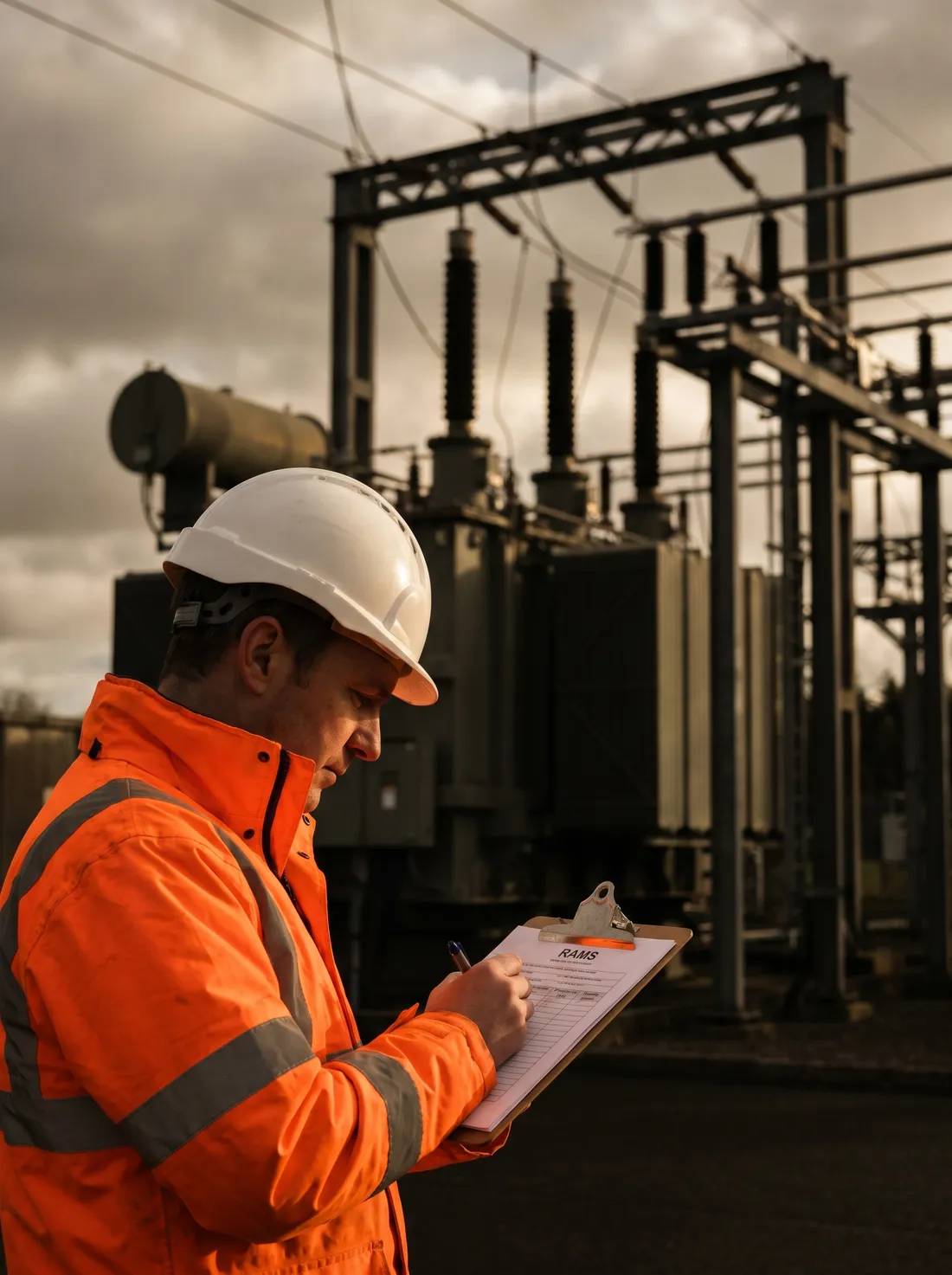
Technicians did not have procedures easily to hand during substation maintenance, which high-risk work legally requires. We built a new maintenance risk assessment method statement (RAMS) template with the relevant procedures in an appendix, so they were always at hand and simple to use.
-
Lift Plan
The client Lift Plan needed more detail and sign-off by an appointed person (AP) to avoid breaching General Application Regulation 42 on planned lifting operations. We drafted a new, more detailed national Lift Plan and provided it to the client for AP approval.
What we did
Putting Safety First: Six Controls Delivered
Working alongside the client team, our consultant turned each finding into a concrete control. Several of these went beyond the local sites and put good practice in place across the whole organisation. This is the kind of forward-looking CDM advisory work that stops risk at the design and planning stage rather than on the day.
- A client letter to clarify client responsibilities
- A Design Standard Hazard Register for site-specific design risk
- A national MEWP procedure and risk assessment, with an emergency plan
- A plan to roll out national MEWP training once approved
- A substation maintenance RAMS template with easy-access procedures
- A new, more detailed national Lift Plan for AP sign-off
The Outcome On This Project
Related case studies
More From The Same Sector
TierOne Risk Maturity
An industry-first framework that reduces third-party risk in the construction supply chain, piloted with Multiplex.
Utilities Industry Safety
Building a safe system of work at height across a utility's high-voltage substations.
Back To All Case Studies
Return to the full case-study index across wind, utilities and engineering.
CMIOSH · The Coyle Approach · 48 hours
Get The Same Chartered Eyes On Your Estate
We place degree-qualified safety advisors on engineering and electrical infrastructure within 48 hours, backed by our chartered founder. Tell us about your sites and we will find the gaps.
Discuss your requirements