UTILITIES
Reducing Falls-From-Height Risk On HV Transformers
While on site for a separate piece of work, our consultant spotted network technicians working at height on high-voltage transformers without the right controls, and set about closing the gap for good.
- Industry
- Utilities
- Location
- Ireland (nationwide)
- Year
- 2017 onwards
- Client
- Major network utility (anonymised)
- Coyle role
- Safety Consultant, Working Group Member
The challenge
Working At Height With No Safe System
In 2017, our Coyle Group consultant was on a customer's site for a separate piece of work when he noticed something that should not have been happening. Network technicians were working at height on high-voltage transformers without the control measures the task demanded, and were exposed to a real risk of falling. The gap was a breach of Part 4 of the General Application Regulations 2007, which our guide to the height regulations sets out in full. He raised it there and then with local and senior managers.
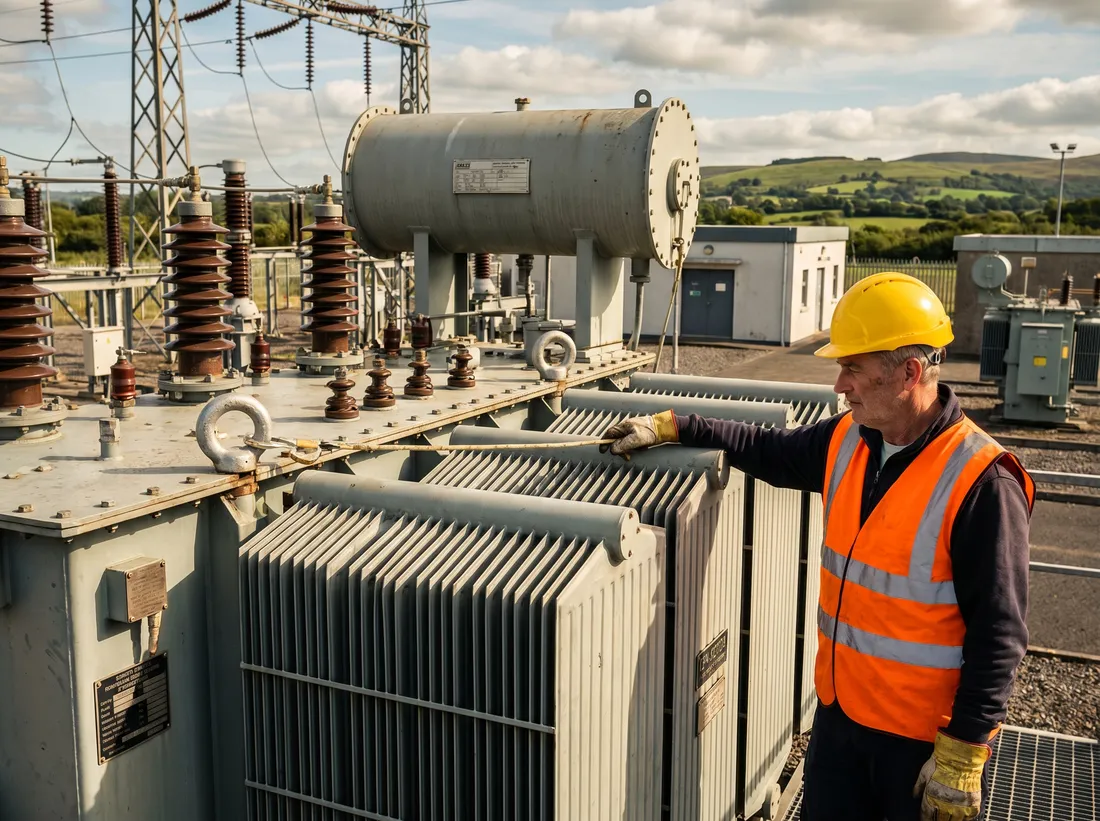
This was not only an unsafe practice for employees and contractors. It also put the customer at risk of breaching the Safety, Health and Welfare at Work (General Application) Regulations 2007, Part 4 (Work at Heights). A closer look confirmed there was no safe system of work for the older transformers, which had no proprietary guard rail or fall-arrest anchorage system fitted.
What we found
A Risk With No Off-The-Shelf Fix
This was not a simple risk to design out. There was not a single fall-protection system built specifically for these older transformers, and the way the equipment worked made every conventional option awkward. The transformers had short outage windows of one to two days, so scaffolding the full perimeter was rarely practical, access was difficult, and anchor points away from the leading edges were limited.
A high-voltage station working group was formed to solve it, and our consultant was invited to join as the health and safety specialist. He brought risk assessments, legislation expertise and safety insight from other sectors, and over the following year the group trialled a series of options across sites in Ireland.
What we did
Putting Safety First: A National Working Practice
The group settled on a temporary horizontal lifeline system that anchors to the existing lifting eyes on the transformers. A technician clips a retractable lanyard to the lifeline and stays fully secured to a fall-arrest system while moving freely to work. During the trials, we identified one more requirement the team had missed: a rescue plan for anyone left suspended in a harness after a fall. That plan was written and put in place before rollout.
With the system and rescue plan agreed, the business still needed one consistent way of working nationwide. Our consultant was a key contributor to the national procedure, developing content, answering management questions and joining the team that presented it to senior managers for approval. Once signed off, it was rolled out across the country, backed by the same disciplined audits and inspections we apply on every engagement.
The Outcome On This Project
Related case studies
More From The Same Sector
TierOne Risk Maturity
An industry-first risk maturity framework that reduces third-party risk in the construction supply chain, piloted with Multiplex.
Engineering: 63 Substations
Fixing five critical risks across 63 live substations in Ireland in six months.
Back To All Case Studies
Return to the full case-study index across wind, utilities and engineering.
CMIOSH · The Coyle Approach · 48 hours
Get The Same Chartered Eyes On Your Utility Sites
We place degree-qualified safety officers on high-voltage utility work within 48 hours, backed by our chartered founder. Tell us about your sites and we will help close the gaps.
Discuss your requirements