10 Hazards in the Workplace That Can Kill in Seconds
Workplace hazards are potential sources of harm to employees and others on site. Most cause injury or ill health over time, but a handful can cause a fatal injury in seconds or minutes if the wrong control fails at the wrong moment.
This guide covers the ten hazards most likely to end in a fatality rather than a near miss, plus the control that should already be sitting behind each one. Correct these and you remove most of the fatal risk from a typical workplace.
The 10 Most Dangerous Hazards in the Workplace and Their Controls
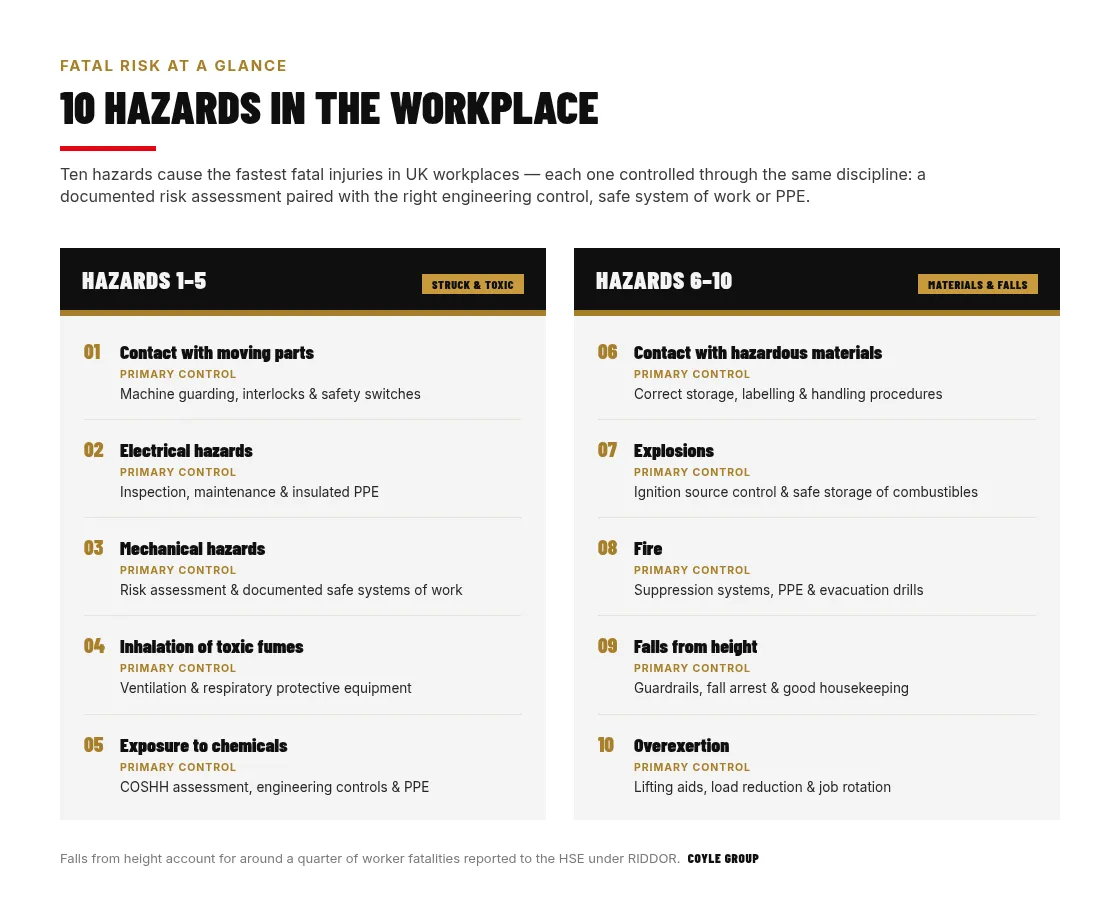
Every hazard below gets the same treatment: what makes it capable of killing quickly, and the control that should already be standing between it and your workers. They are grouped by mechanism rather than ranked by frequency, because a hazard that appears rarely on your site can still be the one that kills. The grid summarises all ten with their primary controls, and the detail on each follows underneath.
1. Contact with moving parts
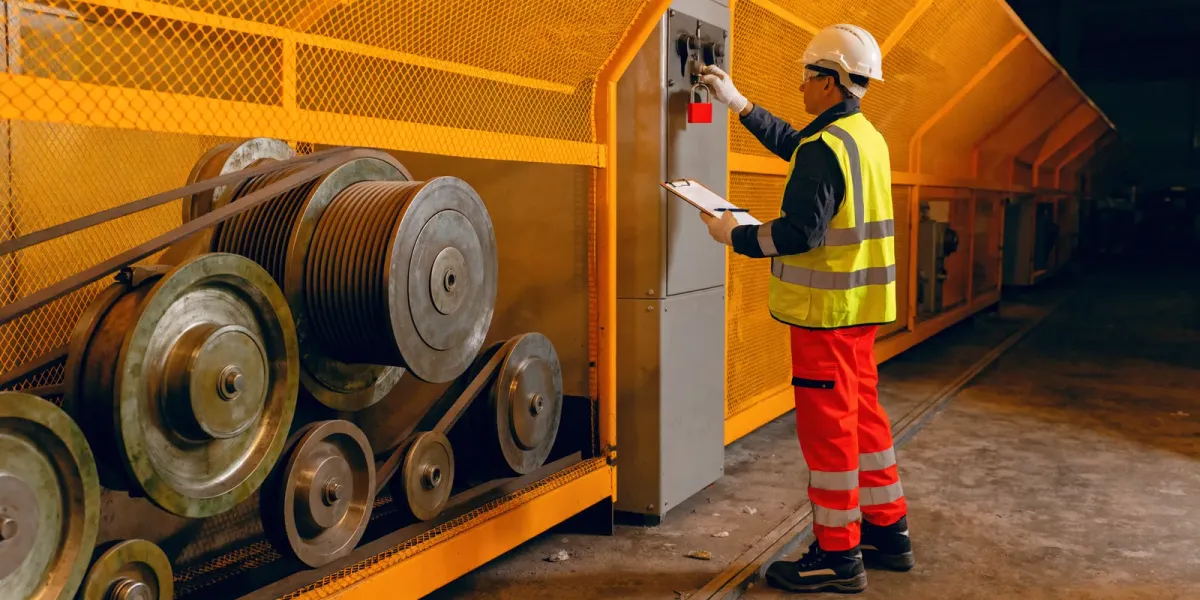
Contact with moving parts is a significant hazard in the workplace, particularly for workers who operate heavy machinery or work around it. These machines can have powerful, fast-moving parts that can cause serious injuries, amputations, or even death within seconds. Examples of dangerous moving parts include gears, pulleys, flywheels, chains, and conveyors.
To prevent contact with moving parts, employers should implement engineering controls including guards, barriers, and safety switches. Machinery and equipment should be properly maintained and inspected as part of a documented safe systems of work. Workers should be properly trained on the safe operation of machinery and wear proper protective gear.
2. Electrical hazards
Electrical hazards are a serious risk in the workplace, particularly in industries where electrical equipment is used. Workers can be exposed to electrical hazards through direct contact with electrical equipment or through contact with conductive materials. Electrical shocks can cause serious injuries, including burns, heart failure, and even death.
To prevent electrical hazards, employers should ensure that all electrical equipment is properly installed and maintained, and that any damaged equipment is repaired or replaced promptly. Workers should be provided appropriate protective gear including insulated gloves, face shields, and rubber-soled shoes.
3. Mechanical hazards
Mechanical hazards refer to the risks posed by machinery and equipment in the workplace. Workers who operate, maintain, or work near these machines are at risk of injuries such as being crushed, caught, or struck by the machines. These hazards can occur due to inadequate guarding, lack of safety procedures, human error, or equipment malfunction.
To prevent mechanical hazards, employers must conduct a thorough risk assessment of the workplace to identify potential hazards. This may involve installing safety guards and barriers, providing appropriate training and PPE, and implementing safe work procedures.
4. Inhalation of toxic fumes
Inhalation of toxic fumes is a serious hazard in many workplaces, particularly in industries that use or produce chemicals. Toxic fumes can come from chemicals, solvents, paints, cleaning products, and welding fumes. Some gases, such as carbon monoxide, can be lethal even in low concentrations.
To prevent inhalation of toxic fumes, employers must identify and assess potential sources and take measures such as using ventilation systems, providing appropriate PPE, training workers on safe handling and storage of chemicals, and implementing safe work procedures.
5. Exposure to chemicals
Exposure to hazardous chemicals is a significant workplace hazard in many industries. Hazardous chemicals can come in various forms including gases, liquids, and solids. Chemical exposure can cause various health problems including skin irritation, respiratory problems, and long-term problems such as cancer, reproductive disorders, and organ damage.
To prevent exposure to hazardous chemicals, employers must identify and assess potential sources and take measures including using engineering controls such as ventilation systems, providing appropriate PPE, training workers, and ensuring chemicals are properly labelled and stored.
6. Contact with hazardous materials
Direct contact with hazardous materials is a significant workplace hazard in many industries. Hazardous materials can come in various forms, including corrosive liquids, toxic gases, and infectious materials. Exposure can cause chemical burns, skin irritation, eye irritation, respiratory problems, and long-term health problems such as cancer.
7. Explosions
Explosions are a significant workplace hazard in many industries, including manufacturing, construction, mining, and oil and gas. Explosions can occur due to combustible materials, chemicals, or gas leaks, and can cause catastrophic injuries and fatalities. Explosion injuries include burns, traumatic injuries, eardrum damage, and lung injuries.
8. Fire
Fires are a significant workplace hazard in many industries, including manufacturing, construction, healthcare, and laboratories. Fires can occur due to faulty equipment, electrical malfunctions, combustible materials, and chemical reactions. Fires can spread rapidly and result in severe injuries and fatalities due to burns, smoke inhalation, and other injuries.
To prevent workplace fires, employers must identify potential sources of fire, install ventilation systems and fire suppression systems, offer PPE to workers, train workers on safe handling of combustible materials, and maintain equipment effectively.
9. Falls from height
Falls from height are an ever-present hazard in various industrial environments, particularly construction, manufacturing and maintenance. In 2025/26, falls from height caused 31 of the 126 work-related worker deaths reported to the HSE in Great Britain, around a quarter of all fatal injuries and the single biggest cause on the list, according to the HSE’s fatal injury statistics. Falls can occur due to unstable or unguarded platforms, faulty equipment, and inadequate fall protection measures, and can result in severe head injuries, spinal cord injuries, and fractures.
Employers have a specific legal duty here under the Work at Height Regulations 2005, which require every work-at-height task to be properly planned, supervised and carried out safely. In practice that means identifying and assessing potential fall hazards and providing the necessary equipment, such as guardrails, safety nets, and personal fall arrest systems. Simple good housekeeping also removes many of the slip and trip hazards that cause falls on the same level.
10. Overexertion
Overexertion can happen due to various reasons, such as lifting heavy objects, pushing or pulling heavy loads, or repetitive motions. Overexertion can cause muscle strains, sprains, or even heart attacks, and can happen suddenly and without warning.
To prevent overexertion, employers must identify and assess the potential overexertion hazards in the workplace. This may include providing appropriate lifting equipment such as hoists and cranes, reducing the weight of loads, or implementing job rotation to reduce repetitive motions.
Controlling the Workplace’s Deadliest Hazards
Workplace safety is essential for both employers and employees. The hazards in the workplace can lead to severe injuries, fatalities, and long-term health problems. Employers must conduct regular risk assessments, identify potential hazards, and implement measures to control or eliminate these hazards. Not every workplace hazard is this severe: everyday risks like the ones we cover in office hazards rarely kill outright, but they still deserve the same systematic approach of identify, assess, control, and review.
By prioritising workplace safety and taking proactive measures, employers and employees can create a safer work environment. If you need help assessing the fatal risks in your workplace, our audits and inspections team can review your controls and safe systems of work.
Coyle Group audits sites across the UK against the same ten hazards and the controls that should already be in place behind them. Get expert RAMS & compliance support before one of them turns into a RIDDOR report.
Frequently Asked Questions
What are the 10 hazards in the workplace?
The ten hazards most likely to cause fatal injury quickly are contact with moving machinery, electrical hazards, mechanical crushing hazards, inhalation of toxic fumes, chemical exposure, contact with hazardous materials, explosions, fire, falls from height and overexertion. Falls from height cause around a quarter of the work-related worker deaths reported to the HSE in Great Britain each year, making it the single biggest killer on the list.
How do you control fatal hazards?
Follow the hierarchy of control: eliminate the hazard where you can, then use engineering controls such as machine guarding, then safe systems of work and training, with PPE as the last line of defence. A documented risk assessment should sit behind every control you choose, and it should be reviewed whenever the task, equipment or workforce changes.
What are the main types of workplace hazards?
Workplace hazards generally fall into five types: physical hazards such as falls and machinery, chemical hazards such as fumes and toxic substances, biological hazards such as bacteria and mould, ergonomic hazards such as manual handling and repetitive strain, and psychosocial hazards such as stress and fatigue. The ten instant killers in this guide sit mostly in the physical and chemical categories, because those are the hazards most likely to kill within minutes rather than cause long-term ill health.
What are 5 of the most common workplace hazards?
The five hazards UK employers report most often are slips, trips and falls, manual handling injuries, electrical faults, hazardous substances and contact with machinery. Not all of these are instant killers: most slips and trips cause injury rather than death, but falls from height and machinery contact both sit on our list of the ten hazards most likely to kill in seconds rather than cause a lost-time injury.
What are the 10 safety rules for avoiding workplace hazards?
There is no single official list, but the rules employers apply in practice are: assess the risk before work starts, eliminate or substitute the hazard, guard moving machinery, isolate electrical and confined space work, provide the right PPE, train workers on safe systems of work, keep walkways and housekeeping clear, maintain equipment on schedule, report near misses, and review controls regularly.
Are there more than 10 hazards in a typical workplace?
Yes. Ten hazards cover the fastest fatal risks, but broader workplace hazard checklists commonly run to 20 or more once you add noise, vibration, stress, poor lighting, display screen equipment and slips on level ground. Those extra hazards rarely kill outright, which is why they sit outside this list, but they still need a place in your risk assessment and your control measures.
What are the 8 common workplace hazards?
Some guidance groups workplace hazards into eight categories: general safety hazards such as slips and trips, machinery and construction risks, chemical hazards, psychosocial hazards, mobile work hazards, physical hazards such as noise and vibration, ergonomic hazards, and biological hazards. Our ten instant killers overlap with several of these categories but focus specifically on the hazards capable of causing fatal injury within seconds or minutes rather than long-term harm.