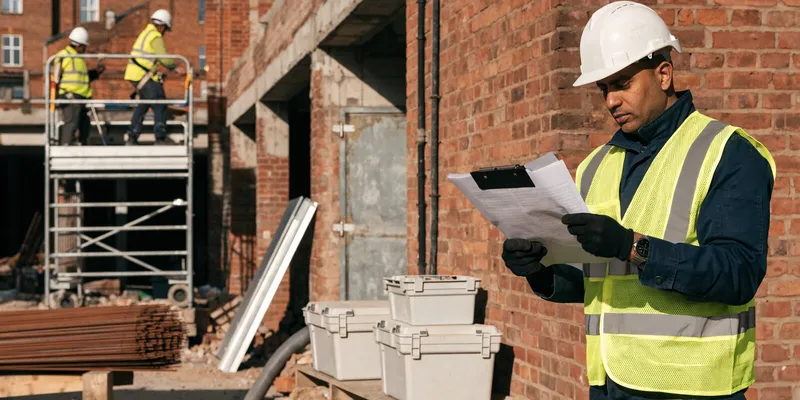
How Data Tracking Improves Your Safety Standards
Historically, companies only analysed lag indicators to meet safety standards and determine safety performance. Before that, workplace safety data was simply collected with the aim of filing historical records of business transactions, finances, and human resources.
Today, however, Safety Management Systems (SMS) have evolved into digital cloud- or site-based systems that track safety incidents, monitor training, and regulate compliance. In other words, health and safety (H&S) professionals have more data than ever before. These state-of-the-art data safety systems provide prescriptive data from sensor technologies, and predictive information; all of which can be used to improve your company’s safety standards.
To demonstrate the value of good data collection and management, here are eight ways that simplified data tracking can create new opportunities to improve workplace safety.
8 Ways That Data Tracking Improves Company Safety
#1 - Predicts Workplace Safety Incidents
Safety regulatory and enforcement agencies require companies to submit all kinds of worker injury and illness information. This also includes incident reports, investigations, and workplace inspection reports. With the help of SMS tools, all that data can be integrated into company systems to develop predictive analytics. That way, a company could identify potential safety hazards ahead of time before they can cause any damage.
#2 - Monitor and Benchmark Company Safety Culture
With data tracking and reporting, your company can look at a broader scope of incident information across many domains, which subsequently influences company policy. Data can be used to analyse a sequence of events and identify issues leading up to an incident, as well as highlight any outlying circumstances or contributing factors. Furthermore, tracking tools can monitor and report on how frequently that incident occurs and classify it by type or severity of injury.
By linking the historical work safety data with HR information like worker experience, length of shift, and training, your company can meaningfully change safety policies and procedures or develop better practices.
#3 - Improves Compliance
The most ideal SMS software solutions today will integrate national H&S regulations into their systems, ensuring that there are no stones left unturned regarding compliance. Data can be used to remind workers and alert companies regarding compliance with their respective regulatory bodies, by linking workplace activities to the most cited workplace deficiencies or breaches of safety standards.
In the event of a compliance investigation or inspection, the availability of an abundance of workplace H&S information could potentially reduce the length of the investigation or even prevent a fine from regulatory agencies.
#4 - Identifies Root Causes of Incidents
From identifying a lack of managerial or procedural training, to human error, the practice of tracking, analysing, and reporting on H&S data in real time can help diagnose the exact reason and cause for an incident. By investigating historical incident reports, SMS tools can conduct a root cause analysis and pinpoint practical targets for safety supervisors to effect change.
#5 - Inform Safety Awareness Campaigns and Training Programmes
A resulting benefit of being able to identify the root cause of incidents through data tracking is that it allows your company to engage your teams in meaningful awareness campaigns that are based on their own experiences. Data reporting tools help to determine skill gaps and training needs, enabling the advancement of focused training programmes so employees have the latest safety information, track training progress, and assess employee performance.
#6 - Improved Analysis of Working Conditions
The latest SMS technology has made it feasible to remotely monitor worker location and fatigue, facility or site traffic flows, and even environmental and weather conditions. The ability to gather and investigate data of workplace conditions and incident reports in real time provides any company keen on improving safety the opportunity to swiftly interpret the data and make informed decisions.
#7 - Real-Time Monitoring of Equipment Operations
Made possible by equipment and health monitoring technology, tracking real-time data can help make timely safety decisions and send out alerts. Mostly through wearable devices, an emergency alert about a staff member’s current state, or even equipment’s current operational status and any required maintenance, can be made when tracking data.
For instance, wearable devices with operator monitoring and intervention sensing technologies can send alerts to work supervisors when a safety threshold is reached on worker fatigue levels or heart rate. A clear example is Seeing Machines safety sensors, which track eyelid movement of truck drivers to detect fatigue and notify supervisors.
#8 - Expedites Incident Reporting
For tedious and repetitive processes of reporting, data tracking technology is automated to instantaneously update your company management and the safety data management system. With mobile reporting systems like wearable devices, smartphones, and tablets, it is possible for workers to provide real-time incident and compliance reports without the delay of having to get back to the office.
Digital data tracking safety solutions save time and money that would otherwise be spent on handling paper printed reports and safe record keeping. Cloud-based SMS systems provide scalable storage services that safely store data to prevent records from being lost or forgotten.
4 Steps to Make Sure Data Tracking Improves Your Company Safety
For your company’s data to be practical, meaningful, and actionable, you will have to follow these four steps:
STEP I: Decide What You Want to Know Before You Start Measuring
It is helpful to plan and define which metrics or measures you will be paying attention to. Test and make sure that you are able to measure what matters and will actually change safety behaviour.
STEP II: Give Context to the Data Being Collected
After defining the scope of the data being collected, educate leaders and individuals on what the numbers you are measuring mean, why they matter, and how they can impact future safety decisions and behaviours. It helps to have a target, a baseline, or evidence of how safety behaviour had been in the past, to compare the incoming data to.
STEP III: Use Different Metrics at Different Levels
Business units, departments, and teams should also be able to have their own data that can help them focus on their separate objectives. Understanding when to use different metrics is key. Empowering your teams and departments to have their own measurements ensures better targeted impact.
STEP IV: Use Data in Reports to Tell a Story
Most SMS data collecting tools have dashboards that generate safety data reports. When going further to break down the relevance of the data collected to workers and leaders, it helps to have eye-catching information that clearly summarises the most vital details, answering why and what lies ahead for the company’s safety culture.
If safety data management is still unclear in your business, it may be time to take another look at your business analytics. Feel free to reach out for a free consultation.