Safety and Profitability: The £22.9bn Cost of Non-Compliance

There’s a persistent myth in our industry, a myth that pits safety and profit against each other. For too long, safety has been seen as a checklist box to tick, or a cost centre that slows down progress and chips away at margins. But let’s be honest: that mindset is as outdated as paper timesheets and “just walk it off” attitudes on site.
The truth is, when safety is treated as a core value rather than an afterthought, it becomes a catalyst for operational resilience, employee engagement, and, yes, sustainable profit. A great safety team doesn’t just keep you compliant; they drive efficiency, protect your reputation, and create the kind of workplace where people actually want to give their best.
So, the question isn’t really “Can your safety team create compliance and profits?” The real question is: “How can you afford not to?”
The False Divide: Safety vs. Profit
Too many boardrooms still see safety as a cost centre: a necessary obligation, a regulatory hoop to jump through, a line item to be trimmed when margins are tight. But the data tells a different story. Companies with well-run safety programmes don’t just avoid fines; they outperform their peers financially. In fact, businesses with better health and safety records consistently report higher profits. It’s not magic. It’s risk management, operational excellence, and a workforce that feels valued enough to give their best.
Why does this myth persist? It’s easy to see why. Safety investments can look like a drain on resources: new PPE, more training, extra hours spent on toolbox talks, or the upfront cost of digital systems. But what’s often missed is the compounding effect of these investments. A safer workplace isn’t just about avoiding the worst-case scenario, it’s about smoother operations, fewer disruptions, and a workforce that trusts leadership. And trust, as we all know, is the currency of high performance.
A simple truth is that when workers believe their employer genuinely cares about their wellbeing, absenteeism drops, engagement rises, and productivity soars. The companies that get this right don’t just survive, they thrive, even in tough markets.
The High Cost of Non-Compliance
Let’s get real about what non-compliance actually costs. It’s not just about the fines, though those can be eye-watering: a court can impose an unlimited fine under the Health and Safety at Work etc. Act 1974. It’s about:
- Accidents and injuries that lead to lost time, compensation claims, and sometimes lives lost tragically.
- Legal battles and settlements that drain resources and morale.
- Damaged reputations that make it harder to win bids or attract top talent.
- Higher insurance premiums that eat away at already-thin margins.
But let’s dig deeper. When a serious incident happens, the ripple effect is massive. Consider the following:
1. Direct Costs
These are the very obvious ones: medical expenses, regulatory fines, legal fees, and property damage. But even here, the numbers are staggering. A single workplace fatality can cost a company millions in direct costs alone.
2. Indirect Costs
Here’s where it gets even more painful. Indirect costs, like lost productivity, project delays, retraining, and the time spent investigating and reporting, sit underneath the obvious bill and are much harder to see coming. Suddenly, that “minor” incident becomes a major hit to your bottom line.
3. Reputational Damage
In today’s world, one viral video or negative headline can undo years of brand-building. Clients, investors, and future employees are watching. They want to work with companies that take safety seriously. Non-compliance isn’t just a legal risk, it’s a business risk.
4. Lost Opportunities
Ever lost a major contract because your safety record didn’t stack up? It happens more than you think. Many clients, especially in high-risk industries, are demanding documented evidence of a working safety culture before signing on the dotted line. Fail to meet their standards, and you’re out of the running.
The bottom line? Non-compliance is a bet against your own future. And it’s a bet you can’t afford to lose.
The Cost of Non-Compliance in the UK
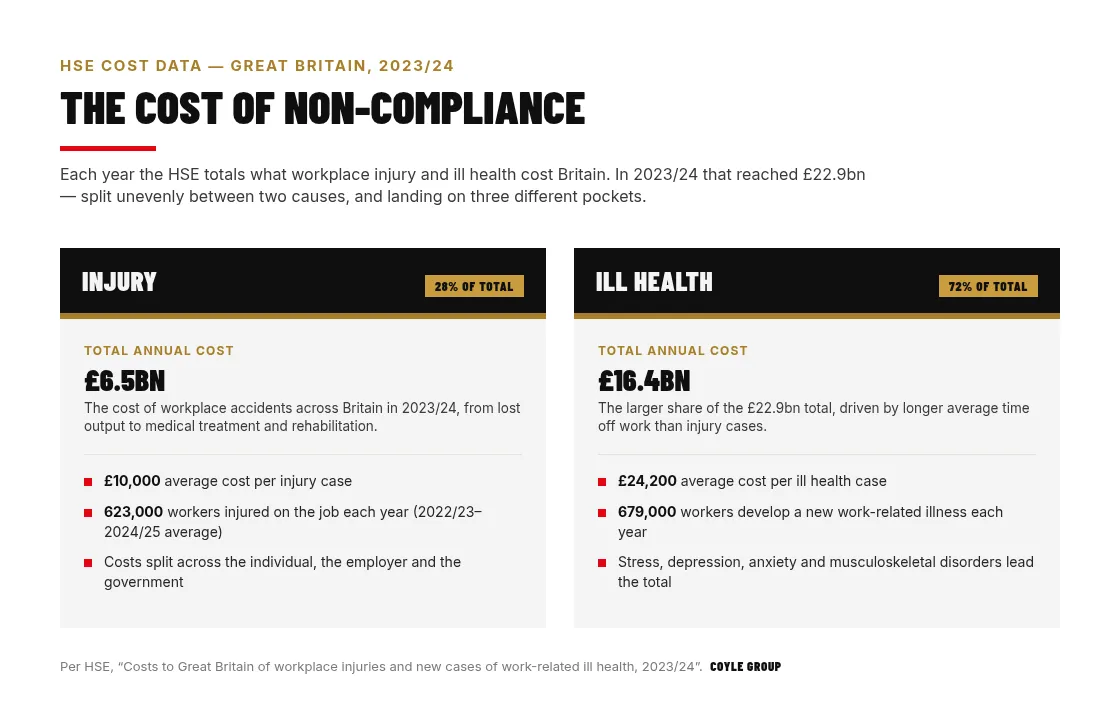
In Britain these numbers are not abstract. Every year, the HSE publishes an annual cost estimate for workplace injury and new cases of work-related ill health across the economy, and the latest figure, for 2023/24, is £22.9bn.
That total splits unevenly between two causes. Ill health accounts for £16.4bn of it (72%), against £6.5bn for injury (28%), because ill health cases typically keep people off work for longer. On a per-case basis that works out at roughly £10,000 for the average injury and £24,200 for the average case of ill health. The bill also splits across three different pockets: individuals carry £13.4bn of it, employers £4.3bn, and government £5.2bn, largely through the NHS and benefits system.
Whatever the exact figure in a given year, the direction of travel is clear: poor safety is one of the most expensive things a business can tolerate, and most of that cost is avoidable. Getting the basics right starts with knowing who is accountable for safety and understanding the compliance challenges that trip up growing businesses.
Safety Teams: From Cost Centre to Profit Engine
So how do safety teams change the narrative? How do they move from being seen as a drag on the bottom line to a driver of profit and performance?
Here are a few key ways they make this shift:
1. Proactive Risk Management
Great safety teams don’t just react, they predict and prevent. By identifying hazards before they become incidents, they keep projects running smoothly and avoid costly shutdowns or investigations. Every near-miss prevented is money saved, reputation protected, and, most importantly, a life safeguarded.
2. Asset Protection and Uptime
Equipment downtime is a silent killer of margins. Safety teams who champion proactive maintenance and inspections extend the life of assets, reduce repair costs, and keep projects on schedule. In industries like construction and manufacturing, where machinery is king, this alone can be a game-changer.
3. Digital Transformation
The best safety teams are embracing technology: digital checklists, real-time reporting, and analytics that spot trends before they become problems. This doesn’t just save time on paperwork; it frees up skilled professionals to focus on what matters: keeping people safe and projects moving.
4. Employee Engagement and Retention
People want to work where they feel safe and respected. A culture of safety is a culture of care, and it pays dividends in engagement, productivity, and retention. High turnover is expensive. Engaged, experienced workers are priceless.
5. Brand and Client Trust
Clients notice when you take safety seriously. It’s not just about avoiding negative headlines; it’s about building a reputation as a responsible, reliable partner. In a competitive market, that trust is a powerful differentiator.
None of these five require a bigger safety budget. They require a safety team with a seat at the table early enough to influence how work is planned, rather than one handed a finished programme and asked to sign it off. That is usually the only structural change a business has to make before the numbers start moving.
Compliance: The Foundation, Not the Finish Line
Compliance is the baseline. Yes, your safety team needs to ensure you meet every regulation, every standard, every audit. But true value comes when they go beyond compliance, when they build a culture that makes safety instinctive, not just procedural. That shift pays back in four ways, roughly in the order a business feels them:
- Reduced legal and regulatory risk. Meeting and exceeding safety standards helps your company avoid costly fines, legal battles, and forced shutdowns.
- Boosted productivity. When employees trust their environment, they can concentrate better, work more efficiently, and deliver higher-quality results.
- Lower insurance premiums. A strong safety record demonstrates lower risk to insurers, resulting in decreased insurance costs for your business.
- Operational continuity. With fewer accidents or disruptions, projects stay on schedule, clients remain satisfied, and your reputation for reliability grows.
The first of those lands within weeks; the last takes a couple of years of clean records to show up in your win rate. That lag is why safety work gets cut in a tight quarter and why the businesses that hold their nerve end up with the advantage. Compliance keeps you trading, but culture is what compounds.
The Human Factor: Why Safety Culture Matters
Let’s not lose sight of the human element. Behind every statistic is a person: a worker, a family, a community. When safety is just a box to tick, people get hurt. When it’s woven into the fabric of your business, people thrive. That’s where real leadership comes in: creating an environment where everyone feels valued and protected.
A safety team empowered to challenge, educate, and innovate will transform your culture. They’ll move the conversation from “What’s the minimum we can get away with?” to “How can we send everyone home safe, every day, and build a business that lasts?”
This shift in mindset transforms the workplace from a place of compliance to a culture of care and accountability. When people see that their safety truly matters, trust deepens, morale rises, and engagement follows. In the end, a strong safety culture doesn’t just protect individuals, it strengthens the entire organisation and sets the foundation for long-term success.
Practical Steps: Turning Safety Into Profit
Safety shouldn’t be an afterthought or a separate process, it should be embedded in every stage of your operations. From the earliest design discussions to the final delivery, consider how each choice impacts the wellbeing of your team and stakeholders. In practice that means involving safety professionals in planning meetings, risk assessments, and project reviews, not just handing them the finished plan.
When safety is a lens through which every decision is made, hazards are identified earlier and costly mistakes are avoided. That is the whole argument for moving the work forward in the programme: the same hazard costs a conversation to design out and a shutdown to fix on site.
- Invest in training and technology: Your team is only as strong as their knowledge and the tools at their disposal. Ongoing training ensures everyone understands the latest best practices, regulations, and technologies relevant to their roles. Modern technology, like real-time monitoring systems or digital reporting tools, can help spot risks before they escalate.
- Measure what matters: Don’t just count the number of incidents after they happen: track near-misses, leading indicators, and shifts in safety culture. A well-run safety management system makes this routine, so you can identify trends and intervene before small issues become big problems.
- Engage everyone: Safety isn’t just the responsibility of the safety department, it’s a shared commitment across the entire organisation. From leadership in the boardroom to workers on the front lines, everyone has a role to play.
- Celebrate success: Recognising and rewarding safe behaviours reinforces their importance and motivates others to follow suit. Take time to highlight teams or individuals who go above and beyond.
Pick one of those four and run it properly for a quarter rather than launching all four badly at once. Most businesses already have the data they need sitting in incident reports nobody reads, so measuring what matters is usually the cheapest place to start and the fastest to show a result you can take to the board.
The Bottom Line: Safety Pays
If you’re still treating your safety team as a necessary expense, you’re missing the point, and the profit. The companies that thrive in today’s market are those that see safety as a strategic advantage, a driver of efficiency, trust, and value.
Your safety team can, and should, be a profit centre. Not by cutting corners, but by building a culture where compliance is the floor and excellence is the goal. Our safety policy development work is built to get you there, embedding that culture into the policies your teams use every day.
So, next time someone asks, “Can your safety team create compliance and profits?” you’ll know the answer. Coyle Group audits sites and safety cultures across the UK and Ireland against the same standard the HSE data sets out here: book a compliance consultation and we will tell you where you stand.
Frequently Asked Questions
Does safety improve profitability?
Yes. Businesses with strong health and safety records tend to lose less time to incidents, carry lower insurance costs and win more work from clients who screen suppliers on safety. Fewer disruptions and better retention feed straight through to the bottom line.
What is the ROI of workplace safety?
The return comes from costs avoided, including fines, claims, downtime and lost contracts, and value created through uptime, engagement and reputation. Because the indirect costs of a serious incident can run several times the direct costs, prevention usually pays back many times over.
How much does workplace non-compliance cost UK businesses?
HSE puts the cost of workplace injury and new cases of work-related ill health to Britain at around £22.9bn in 2023/24. Ill health accounts for £16.4bn of that (72%), injury for £6.5bn (28%), split between individuals, employers and government.
Can the HSE fine a company for health and safety breaches?
Yes, and there is no statutory cap. Under the Health and Safety at Work etc. Act 1974, a court can impose an unlimited fine on conviction, scaled to the organisation's turnover under the sentencing guidelines, alongside possible director disqualification or imprisonment in the most serious cases.
What is the difference between direct and indirect costs of a workplace incident?
Direct costs are the obvious ones: medical treatment, fines, legal fees and property damage. Indirect costs sit underneath and are harder to see: lost productivity, project delays, retraining, investigation time and the management hours spent on the fallout, which is why the total bill runs well past the first invoice.
Does a good safety record affect insurance premiums and contract wins?
Yes. Insurers price premiums against claims history, so fewer incidents typically means lower renewal costs. Many principal contractors and public sector buyers also screen suppliers' safety records before awarding work, so a clean record protects both margin and pipeline.