How to Price Consulting Services Without Losing Clients
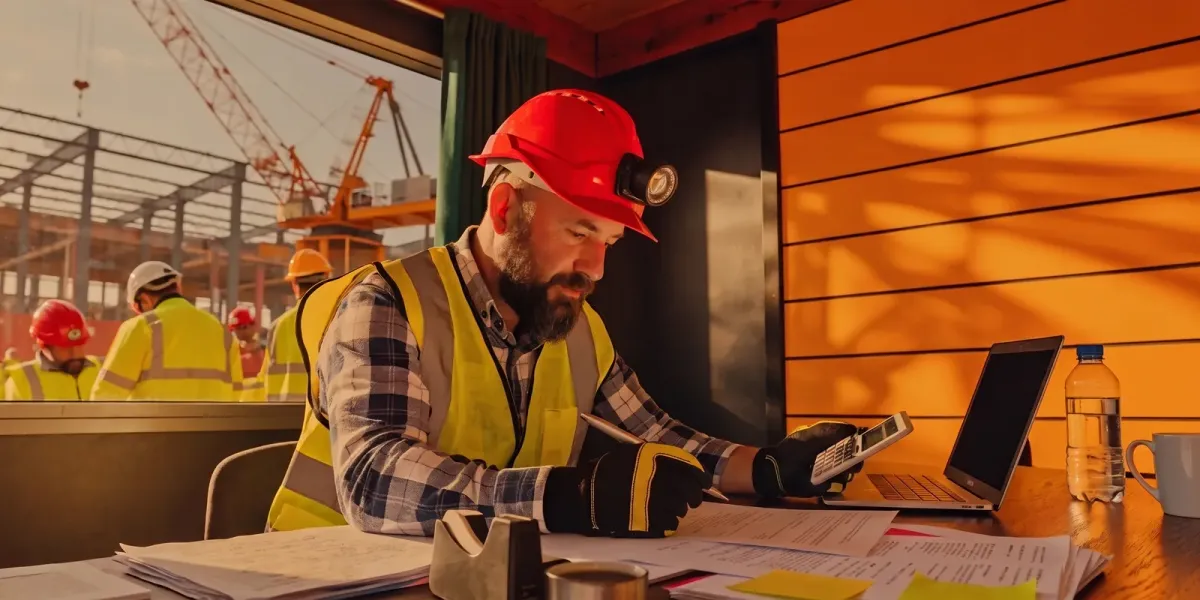
There’s an unspoken tension that runs through the construction industry: it’s the anxiety that creeps in every time we quote a job, the quiet doubt that asks, “Will they think I’m charging too much?” or worse, “Am I even worth this?” If you’ve ever found yourself staring at a proposal, wondering if you should trim your price just to keep the client, you’re not alone. I’ve been there, and I know the toll it takes, not just on your wallet, but on your confidence. The truth is, if we don’t value ourselves, no one else will.
So let’s break the silence. Let’s talk openly about pricing, about how to price consulting services and construction work alike, stand by the number, and still keep the clients who matter. Because the real cost of undervaluing yourself isn’t just financial; it’s personal, and it’s cultural. And it’s time we did something about it.
The Construction Industry’s Pricing Paradox
Construction is a tough game. Margins are tight, competition is fierce, and clients are more cost-conscious than ever. It’s tempting to drop your price at the first sign of resistance, just to win the job and keep your team busy. But every time we do this, we’re setting a dangerous precedent, not just for ourselves, but for the whole industry.
I’ve seen it many times already: skilled tradespeople and business owners who deliver top-notch work but feel pressured to undercut themselves. The result? They end up working longer hours for less money, cutting corners just to stay afloat, and feeling increasingly frustrated. It’s a race to the bottom, and nobody wins: not the contractor, not the client, and certainly not the industry as a whole.
Clients who value quality, reliability, and expertise are willing to pay for it, if you have the confidence to ask. The real challenge is shifting our mindset from “How low can I go?” to “What is my work truly worth?”
Why We Struggle to Charge What We’re Worth
There’s a culture in construction, much like the “just get on with it” attitude we see around, that says you should be grateful for the work and not make a fuss. We’re taught to compete on price, not value, and to avoid confrontation at all costs. No wonder so many of us end up apologising for our invoices or discounting before the client even asks.
But this mindset is holding us back. When we underprice our work, we’re not just losing money; we’re implying that our expertise, our time, and our people aren’t worth much. Over time, this erodes our confidence and our reputation. It also sets a precedent that’s hard to break; once you start discounting, clients come to expect it. I’ve watched this pattern repeat for over two decades since founding Coyle Group and taking calls from contractors doing the same thing to themselves.
The truth is, the clients who matter (the ones who value quality, reliability, and long-term relationships) aren’t looking for the cheapest option. They’re looking for a partner they can trust. If you don’t value your own work, how can you expect anyone else to?
Understanding Your True Costs
Confidence in a price comes from knowing what sits underneath it. Most quotes that go wrong go wrong here, long before the negotiation, because the number was built on half the picture. There are three layers to get right before you put a figure in front of a client: what the work actually costs you, what happens when the job doesn’t run to plan, and what you need to earn to still be trading next year.
Before you can price with confidence, you need to know your numbers inside and out. That means accounting for every direct cost (materials, labour, subcontractors) as well as indirect costs like insurance, admin, equipment, and overhead. HMRC’s list of allowable expenses is a useful sense check if you are not certain what counts. Too often, we underestimate these “hidden” costs and end up eating into our own margins.
Don’t forget contingencies. In construction, something always goes wrong: weather delays, supply chain issues, unexpected site conditions. If you’re not building a buffer into your pricing, you’re setting yourself up for stress and disappointment. A good estimate isn’t just about covering your costs; it’s about protecting your business from the unexpected.
Make sure you’re including a fair profit margin. Profit allows you to invest in your people, your equipment, and your own wellbeing. If you’re not making a profit, you’re not building a sustainable business. And if you’re not sustainable, you can’t serve your clients in the long run.
A Worked Example: Building Your Day Rate
Here’s what that looks like on an ordinary job. Take a contractor whose direct costs, labour, materials, and a subcontractor, come to £240 for the day. Add £60 for the overheads a rushed quote usually forgets: insurance, admin, equipment, and a buffer for the site conditions that never quite go to plan. That’s a £300 subtotal before you’ve paid yourself a penny.
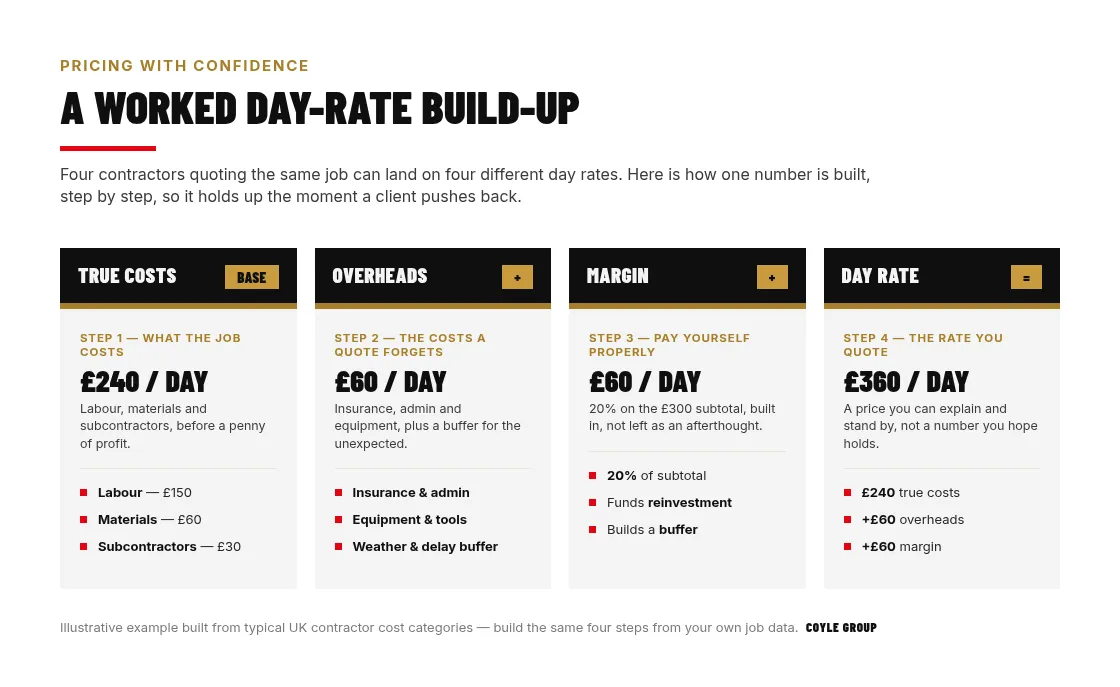
A 20% margin on that subtotal adds another £60, taking the day rate to £360: a number built from real costs, not a guess about what the market will bear. If a client baulks, you can walk them through exactly where every pound goes, which is a very different conversation from simply holding a price you can’t defend. And if you are scaling up, realistic hiring costs belong in that true-cost column too, not as an afterthought once the job is already priced.
How to Price with Confidence (and Not Lose Clients)
Three habits separate the contractors who hold their price from the ones who apologise for it. Work through them in order, because each one makes the next conversation easier.
- Know your numbers and stand by them. Don’t guess or hope for the best: build your price from the ground up, and be ready to explain how you arrived at it. If a client pushes back, you’ll have the facts to support your position, not just a gut feeling.
- Communicate your value clearly and consistently. Don’t just list what you’ll do; explain why it matters. Show how your approach saves the client time, money, and stress. Use stories, testimonials, and data to back up your claims. When clients see the bigger picture, they’re less likely to negotiate over every penny.
- Offer options instead of discounts. If a client says your price is too high, don’t immediately cave. Instead, suggest a scaled-back scope or phased approach. This keeps the conversation focused on value, not just cost, and shows that you’re flexible without being desperate.
Do all three and the price stops being something you defend and becomes something you explain. The client can still say no, but they are saying no to a scope they understand rather than to a figure they assume you plucked out of the air. That is a conversation you can come back from, and often the same client returns with a smaller brief and a signed order.
The Business Case for Confident Pricing
Pricing with confidence isn’t just about self-worth; it’s about sustainability. When you price correctly, you can invest in your people, your equipment, and your systems. You avoid burnout and resentment, and you attract clients who value quality over cost.
A healthy margin allows you to weather the inevitable storms: delays, unforeseen costs, or market downturns. It also gives you a chance to innovate, train your team, and deliver the kind of service that gets you repeat business and referrals. The same logic applies to safety investment: treat it as a line item to cut and you underprice the real risk in the job; treat it as core to delivery and it protects the margin you just built.
And let’s be blunt: nobody wins if you’re working for free. If you’re not making a profit, you can’t stay in business, and if you can’t stay in business, you can’t serve your clients. Confident pricing is about building a future for yourself, your team, and your industry.
Practical Steps to Get There
Start by reviewing your past jobs. Where did you make money? Where did you lose it? What were the warning signs? Use this data to refine your estimates and avoid repeating the same mistakes. Cross-check the day rate you land on against sector earnings data so you know whether you are pricing in line with the market or leaving money on the table.
Track everything: labour hours, material costs, delays, extras. Data will be your best friend. The more accurate your records, the more precise your pricing can be. This isn’t just about covering your costs; it’s about building a business that can grow and adapt.
Educate your team and your clients. Make sure everyone understands the value you deliver, and why your prices are what they are. The more transparent you are, the more trust you’ll build, and the easier it will be to stand by your rates, even when the pressure is on.
Final Thoughts: Your Worth, Your Future
Pricing with confidence isn’t easy. It takes courage, clarity, and a willingness to have tough conversations.
So the next time you’re staring at that proposal, wondering if you should knock a bit off “just to be safe”, know your own worth and remember: the clients who matter will respect you for it.
Let’s build an industry where we value ourselves as much as we value the work we do. If you want a second pair of eyes on your numbers before the next quote goes out, our team will talk it through with you. Because if we don’t value our own work, who will? Together, we can change the culture, not just of pricing, but of construction itself.
Getting the number right starts with knowing exactly what you are responsible for on site. Book a compliance consultation and we will help you price that risk into every quote, not just the labour and materials.
Frequently Asked Questions
How do I charge more without losing clients?
Build your price from a full understanding of your costs, communicate the value you deliver rather than just the tasks, and offer a reduced scope or phased approach instead of a discount when a client pushes back. Clients who value quality will respect a clear, well-justified price.
Why do contractors undercharge?
Many contractors are conditioned to compete on price rather than value and fear losing work if they charge more. Undercharging signals that your expertise is worth less and creates a race to the bottom that harms the whole industry.
How do I price my consulting services?
Start from your true costs, not a competitor's rate card. Add together materials, labour, subcontractors and your overheads, then apply a fair profit margin on top of that total. Divide the result across the days the job takes and you have a defensible day rate, one you can explain rather than a figure you plucked from thin air.
How do you calculate a day rate for a job?
Add your true costs for the day, materials, labour, subcontractors and a share of your overheads, then apply your profit margin on top. That total is your day rate. Track it against real job data over time so your estimates improve, and you replace guesswork with a number built from your own figures.
What is a fair rate to charge as a UK contractor?
There is no single fair rate: it depends on your true costs, the complexity of the job and the value you deliver, not a national average. Build your rate from your actual costs plus a sustainable margin, then check it against similar work in your area. A rate is fair if it covers your costs and still wins the work you want.
What should I do if a client says my price is too high?
Do not cut your rate. Offer a reduced scope or a phased approach instead, so the client gets a lower total cost without you working for less than the job is worth. This keeps the conversation about value rather than price, and shows you are flexible without being desperate to win the work.