How to Build a High-Performing Safety Team
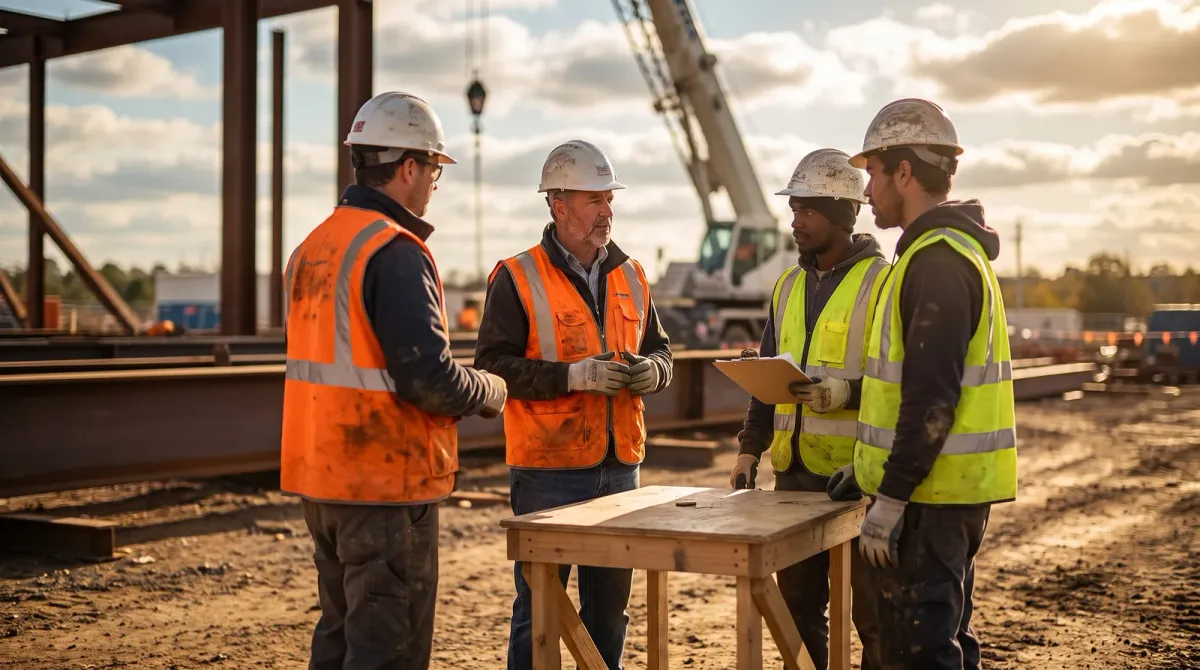
The ability to create and maintain a safe working environment is critically important for businesses today. Accidents, injuries and fatalities can have devastating effects on employees and their families, as well as significant financial and reputational costs for companies. To mitigate these risks, every organisation needs a safety team responsible for identifying potential hazards, developing safety policies, and ensuring compliance with regulatory requirements. However, not all safety teams are created equal.
A high-performing safety team is one that goes above and beyond basic compliance to actively seek out and address potential hazards before they become serious issues. This team is committed to continuous improvement, accountability and effectiveness, and actively seeks feedback from employees to identify areas for improvement. If you are still weighing up whether to build a team in-house or bring in outside support, the traits below are a useful benchmark.
Standing up a safety team from scratch?
Coyle Group’s CMIOSH-chartered advisors help UK and Ireland businesses build a safety team that goes past compliance, with clear roles, a working management system, and the leadership habits that hold it all together.
Talk To A Chartered Advisor
Characteristics of a High-Performing Safety Team
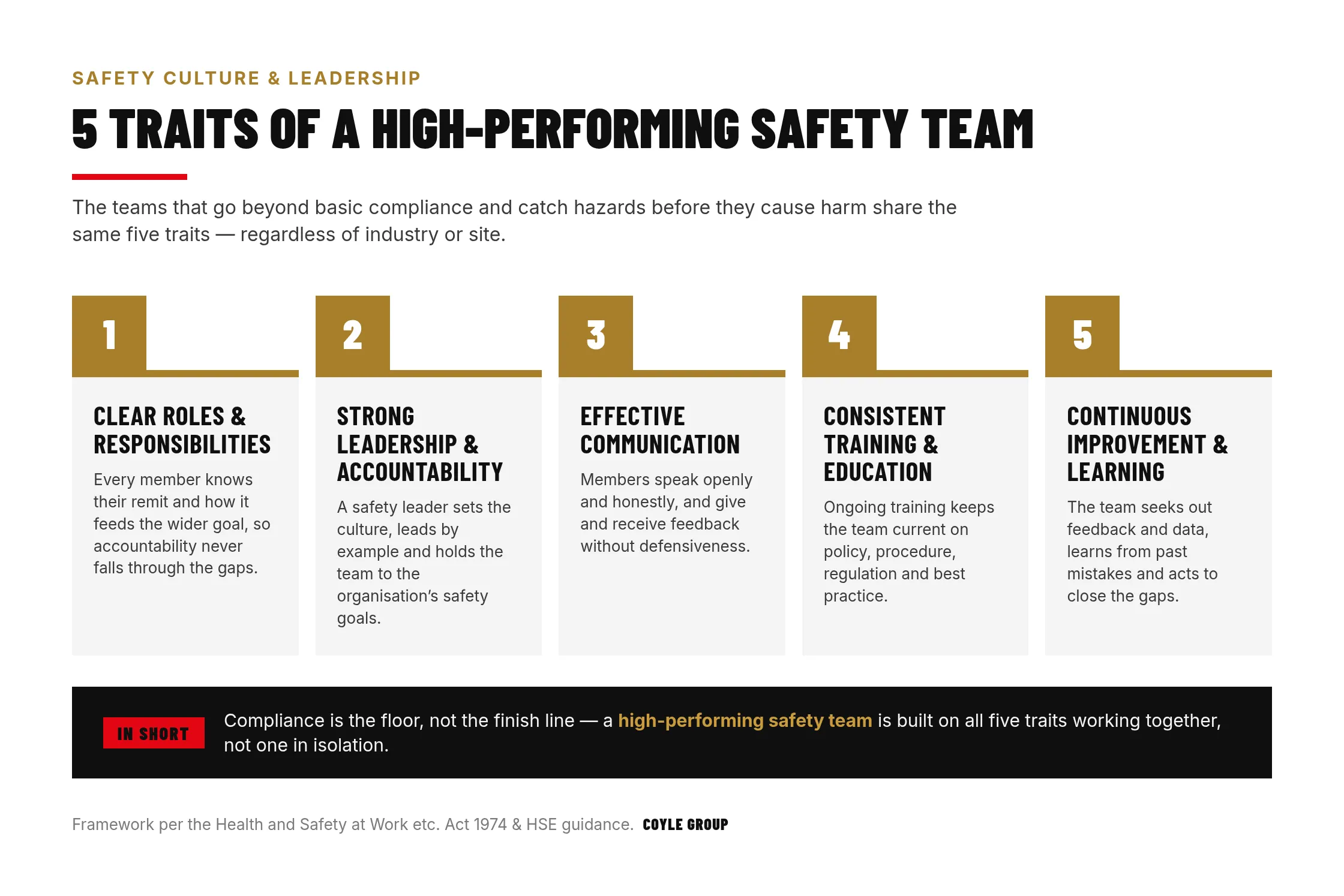
The best safety teams tend to look similar in practice, whatever the industry or site. They are not defined by headcount or budget, but by a handful of habits that show up day after day. These 5 traits are the benchmark to measure any team against, and the foundation for everything that follows:
- Clear roles and responsibilities. Each team member understands their individual role and how they contribute to the team’s overall success. This clarity helps ensure accountability and that everyone is working towards a common goal.
- Strong leadership and accountability. A strong safety leader promotes a culture of safety, leads by example, and keeps the team working towards the organisation’s safety goals, holding members responsible for their actions.
- Effective communication. Team members communicate openly, honestly and clearly, and are able to give and receive feedback constructively.
- Consistent training and education. Team members stay knowledgeable about safety policies, procedures and regulations. Training is ongoing and reflects the latest developments in safety technology, best practice and regulatory requirements.
- Continuous improvement and learning. The team is always looking for ways to improve and learn from past mistakes, actively seeking out feedback and data to identify areas for improvement and acting on them.
These traits rarely appear by accident. They are the result of deliberate choices about how a team is put together and led, which is where the practical work begins.
Building a High-Performing Safety Team
Building a safety team that shows those traits is a structured job, not a one-off hire. The steps below move from the people and systems you put in place to the processes and measures that hold it all together. Work through them in order, and each one gives the next something solid to build on.
Identify Key Stakeholders and Resources
Identifying key stakeholders and resources is a critical first step in building a high-performing safety team. This includes defining the roles and responsibilities of individuals and groups involved in the safety programme, such as executive leadership, managers, supervisors and frontline employees.
Develop a Safety Management System
A safety management system (SMS) is the foundation of a successful safety programme. It provides a structured and systematic approach to identifying hazards, assessing risks, and implementing controls to prevent incidents. The HSE’s managing for health and safety framework sets out the plan, do, check, act cycle that most effective systems follow. The SMS should include policies, procedures and guidelines that align with regulatory requirements and the organisation’s safety goals.
Recruit and Train Safety Team Members
Recruiting and training the right individuals is essential for creating a high-performing safety team. The team should consist of individuals with a mix of technical, analytical and interpersonal skills. Team members should have a deep understanding of the organisation’s operations, hazards and risks, as well as the regulatory requirements that apply to the industry. Professional membership of a body such as IOSH helps them keep that knowledge current.
Implement Effective Safety Processes and Procedures
Implementing effective safety processes and procedures is crucial for preventing accidents and ensuring employee safety. This includes developing job hazard analyses, conducting safety audits, performing risk assessments, and implementing controls to eliminate or mitigate hazards.
Measure and Monitor Safety Performance
Measuring and monitoring safety performance is necessary to evaluate the effectiveness of the safety programme and identify areas for improvement. The safety team should track safety metrics, such as incident rates, near-misses and safety observations.
With the right people, systems, processes and measures in place, you have the foundations of a capable team. The harder task is keeping that standard up once the initial push is over.
How To Maintain a High-Performing Safety Team
Building the team is only the start. A safety team drifts back towards basic compliance unless it is actively kept sharp, so the steps below focus on the habits that sustain performance over the long term. They keep people engaged, the programme current, and good behaviour rewarded.
Promote a Safety Culture
A safety culture is a set of shared values, attitudes and behaviours that prioritise safety in the workplace. Creating and maintaining a safety culture is essential for sustaining the effectiveness of the safety team.
Encourage Employee Involvement
Employee involvement is critical to maintaining a high-performing safety team. Encouraging employees to actively participate in safety activities, and providing opportunities for them to offer feedback and suggest improvements, helps foster a culture of safety.
Continuously Assess and Adjust the Safety Programme
A safety programme should be continuously evaluated and adjusted to ensure it remains relevant and effective. This involves analysing safety data and metrics to identify areas for improvement.
Recognise and Reward Safety Achievement
Recognising and rewarding safety achievement is an effective way to maintain a high-performing safety team. This can include recognising individuals or teams who have demonstrated exemplary safety practices, and providing financial or non-financial incentives for safe behaviour.
Taken together, these habits keep a team engaged and improving long after it is set up. Sustaining that standard is where most organisations either pull ahead or slip back.
How Coyle Group can help
We supply the leadership, systems, and habits that keep a safety team performing long after the initial push, from culture surveys and involvement plans to ongoing chartered oversight.
Sustain A High-Performing Team
Why a High-Performing Safety Team Pays Off
Organisations that prioritise safety and invest in building and maintaining a high-performing safety team not only ensure a safe and healthy work environment, but also benefit from increased productivity, reduced compensation costs and a positive reputation.
If you are not sure where your team sits today, our free Safety Culture Survey is a low-pressure way to get a quick read on your current strengths and gaps.
If you would rather not build the whole team from scratch, our safety consulting service can supply the leadership, systems and expertise to get a high-performing safety team up and running.
Frequently Asked Questions
What makes a high-performing safety team?
A high-performing safety team goes beyond basic compliance to find and fix hazards before they cause harm. It combines clear roles, strong leadership, open communication, ongoing training and a habit of continuous improvement.
What are the roles in a safety team?
Most teams draw on executive sponsors, safety managers, supervisors and frontline employees, each with clearly defined responsibilities. Larger sites often add specialists such as risk assessors, auditors and occupational health advisers.
How do you build a safety team from scratch?
Start by building around a safety management system, then recruit people with the right technical and interpersonal skills. Put clear processes in place, measure performance against safety metrics, and adjust as you learn.
How big should a safety team be?
There is no fixed number. Team size depends on headcount, the level of risk in your operations and the sectors you work in, so a low-risk office needs far less resource than a construction or manufacturing site. A useful benchmark is to size the team around the hazards you have to control, not the number of employees alone.
How do you measure safety team performance?
Track a mix of lagging and leading indicators rather than incident counts alone. Lagging measures include incident rates and lost-time injuries, while leading measures include near-miss reporting, closed-out actions, audit scores and training completion. Reviewing both together shows whether the safety programme is genuinely reducing risk.
What is the difference between a compliant and a high-performing safety team?
A compliant team meets the minimum legal requirements and little more, treating safety as a box-ticking exercise. A high-performing safety team goes further: it finds and fixes hazards before they cause harm, learns from data and near-misses, and treats continuous improvement as part of everyday work.
Is it better to build a safety team in-house or outsource it?
It depends on your size, risk profile and available expertise. Larger organisations often justify an in-house team, while smaller businesses get better value from outsourced safety consulting that supplies leadership and systems without a full-time hire. Many organisations use a blend, keeping day-to-day ownership in-house and bringing in specialists for audits, risk assessments and complex projects.