Hot Spillage Prevention: 6 Office Controls for Employers
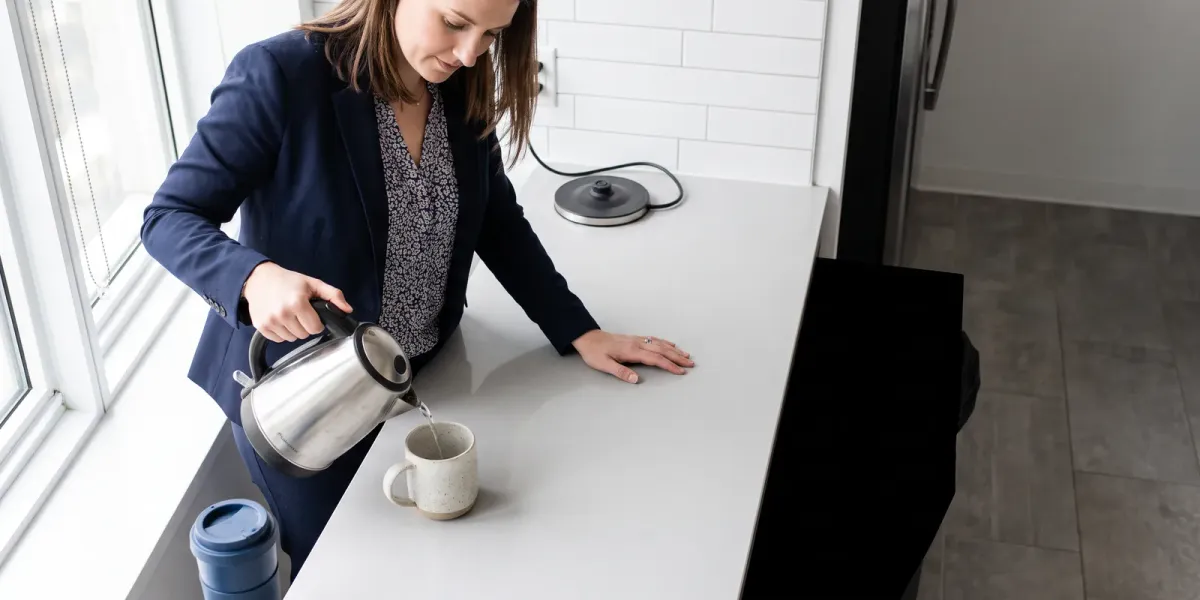
Hot spillage prevention rarely makes the top of an office safety plan, yet hot drinks are one of the few genuine burn hazards most offices have. Tea, coffee and water from a kettle or boiling water tap are hot enough to scald skin in moments. A spill can also short out a laptop or leave a wet floor in a busy walkway.
The good news is that the controls are cheap and quick to put in place. They come down to how people carry, pour and set down hot drinks, and how the kitchen is laid out. This guide sets out the risk, the legal duties in Ireland and Great Britain, the 6 controls we recommend and what to do when a scald still happens.
Does your office risk assessment cover the kitchen?
Hot drinks, boiling water taps and wet floors belong in it. Our chartered team can check yours.
Get Expert RAMS & Compliance Support
Why Hot Spillages Are an Office Safety Risk
Hot spillages sit alongside slips, trailing cables and poor workstation set-up as everyday office hazards. They get less attention because they feel minor, but a scald can mean weeks of dressings and time off work.
The HSE identifies a scalding risk wherever hot water comes out at temperatures above 44°C. A freshly made cup of tea or coffee is far hotter than that, and water from a kettle or boiling water tap is close to 100°C. A scald from a full mug can blister skin through a shirt sleeve before the person has time to pull away.
The harm also spreads beyond the person holding the cup:
- Scalds and burns to the person carrying the drink, and to anyone they bump into.
- Slips on the liquid left behind, especially on hard kitchen and corridor floors.
- Electrical damage when a drink lands on a laptop, keyboard or extension lead under a desk.
- Lost time for first aid, clean-up and any absence that follows.
Most hot spills happen at the same few points: the kettle or tap, the walk from the kitchen to the desk, and the moment the cup is put down. That is where hot spillage prevention needs to focus.
What the Law Expects in Ireland and Great Britain
There is no regulation written only for hot drinks. Employers in both jurisdictions still have a general duty to identify foreseeable hazards, assess the risk and put controls in place, and a kitchen full of near-boiling water is a foreseeable hazard.
Employer duties in Ireland
Under the Safety, Health and Welfare at Work Act 2005, employers must identify the hazards in the workplace, assess the risks and record the controls in a written risk assessment and safety statement. The Safety, Health and Welfare at Work (General Application) Regulations 2007 add duties on the workplace itself, including floors and traffic routes, and on first aid provision.
Employer duties in Great Britain
The Management of Health and Safety at Work Regulations 1999 require a suitable and sufficient risk assessment. The Workplace (Health, Safety and Welfare) Regulations 1992 require floors and traffic routes to be kept free of substances that could cause a slip, which covers the liquid left by a spill. The Health and Safety (First-Aid) Regulations 1981 require adequate first aid equipment and people.
In practice, the duty is the same in both places. If your risk assessment covers fire, display screens and electrical safety but says nothing about the kitchen, it has a gap worth closing.
6 Controls for Hot Spillage Prevention
These 6 controls cover the points where hot drinks most often end up on skin, desks or the floor. None of them costs much, and most are habits that only need setting once.
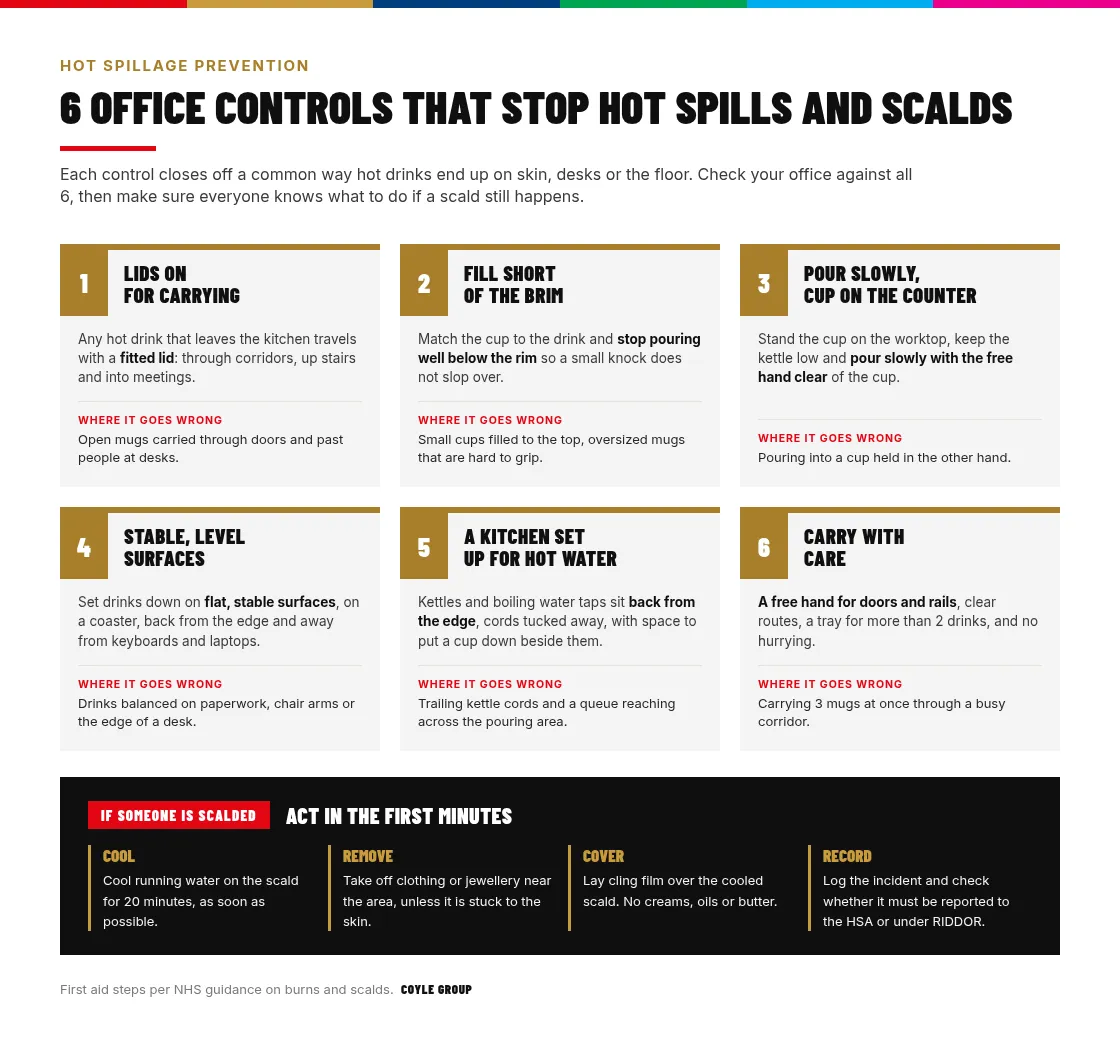
1. Lids on for carrying
Any hot drink that leaves the kitchen should travel with a fitted lid. That means the walk back to the desk, the trip upstairs and the carry into a meeting room. A lid keeps the drink in the cup when someone bumps into you or a door swings back. Reusable cups with screw or push-fit lids work well, and many offices hand them out to new starters.
2. Fill short of the brim
Match the cup to the drink, and stop pouring well below the rim. A small cup filled to the top will slop over with the first step. An oversized mug can be heavy and awkward to grip when it is full. Leaving a gap at the top gives the drink room to move without spilling.
3. Pour slowly with the cup on the counter
Stand the cup on the worktop and pour slowly, with the kettle held low and close to the cup. Keep your free hand clear of the cup. Pouring into a cup held in the other hand puts that hand directly under the stream of boiling water. It is the single most common way people scald themselves in an office kitchen.
4. Set drinks down on stable, level surfaces
Put hot drinks down on a flat, stable surface, ideally on a coaster, and well back from the edge. Keep them away from keyboards, laptops and paperwork that can tip a cup. Drinks balanced on a chair arm, a pile of files or the edge of a desk are spills waiting to happen.
5. Set the kitchen up for hot water
Kettles and boiling water taps should sit back from the edge of the worktop, with cords tucked away and nothing to snag on. Leave clear space next to them so people can put a cup down to pour. Where queues form at busy times, make sure the line does not reach across the pouring area. A drip tray under a boiling water tap catches the splashes that would otherwise end up on the floor.
6. Carry with care
Keep a free hand for doors and stair rails, and walk at a normal pace on a clear route. Use a tray for more than 2 drinks. Carrying 3 mugs at once through a busy corridor is how a small knock turns into a scald for someone else. Clear routes are part of wider good housekeeping, so trailing cables and boxes in walkways make spills more likely too.
Where Hot Spills Happen in the Office
Knowing the controls is half the job. The other half is checking where they break down in your own building. In our experience, the same 4 places come up again and again.
The shared kitchen at peak times. First thing in the morning and just after lunch, several people use the kettle or tap at once. People reach across each other, and someone pours while another person squeezes past behind them.
The route back to the desk. Doors, corners and stairs are where an open mug meets another person. Fire doors on closers are a particular risk because they swing back faster than people expect.
Meeting rooms. Trays of drinks carried in for visitors, jugs of hot water on the table and cups set down beside laptops and cables all add up.
The desk itself. Drinks pushed to the back of a cluttered desk end up next to power strips and chargers. A knocked cup there can become an electrical problem as well as a mess.
A short walk-through of these 4 places with a fresh pair of eyes will usually show you which controls need tightening first.
What to Do If Someone Is Scalded at Work
Even with good controls, a scald can still happen. Acting quickly in the first few minutes makes a real difference to how badly the skin is damaged.
First aid for a scald
The NHS guidance on burns and scalds sets out the steps:
- Hold the scald under cool running water for 20 minutes, as soon as possible.
- Remove any clothing or jewellery near the area, unless it is stuck to the skin.
- Once the scald has cooled, lay cling film over it. Do not wrap it around a limb.
- Do not put creams, oils or butter on the scald, and do not burst any blisters.
Call 999 or 112 for a scald that is large or deep, or one on the face. Make sure your first aiders know these steps and that the first aid kit includes burns dressings or cling film.
Recording and reporting the injury
Record every scald, however minor, and review what caused it. The cause is usually one of the 6 controls above being missed.
Some scalds must also be reported to the regulator. In Ireland, the HSA requires an accident report where the injured employee cannot carry out their normal work for more than 3 consecutive days, excluding the day of the accident. In Great Britain, a serious scald covering more than 10% of the body is a specified injury under RIDDOR, and injuries that keep someone off normal duties for more than 7 days must be reported too.
Cleaning Up a Hot Spill Safely
The spill itself becomes the next hazard as soon as the cup hits the floor. Deal with it straight away:
- Let the liquid cool for a moment before wiping, so the person cleaning up does not scald their hands.
- Put out a wet floor sign and keep it in place until the floor is dry.
- Check under desks for liquid near sockets and extension leads before anyone touches them.
- Report damaged electrical equipment so it can be checked before it is used again.
Give the kitchen a named owner for spills. A spill everyone notices but nobody owns is a spill that stays on the floor.
Building Hot Spillage Prevention Into Your Office Safety Routine
Hot spillage prevention works best when it is built into the safety routine you already run. A few simple steps keep it in place:
- Add the kitchen to your risk assessment. List kettles, boiling water taps and hot drinks as hazards, with the 6 controls as the measures in place.
- Cover it at induction. Show new starters where the lidded cups are, how the boiling water tap lock works and what to do if someone is scalded.
- Check it during inspections. Include the kitchen, meeting rooms and main walkways in your regular workplace inspections.
- Review every incident. Each scald or near miss tells you which control slipped and where.
Small offices can manage all of this in an afternoon. Larger sites with several kitchens, visitor areas and shift patterns benefit from a structured review.
Want your office risk assessment checked against these controls?
We review assessments, safety statements and inspection routines for offices in Ireland and the UK.
Get Expert RAMS & Compliance Support
Keeping Hot Drinks From Becoming Office Injuries
Hot spillage prevention comes down to a handful of habits: lids on, cups filled short, pouring with the cup on the counter, stable surfaces, a sensible kitchen layout and careful carrying. Put those in place, make sure first aiders know the 20-minute cooling rule, and record every scald so you can see which control slipped.
If you want a chartered team to check that your risk assessment and safety statement cover the kitchen as well as the rest of the office, get expert RAMS & compliance support from Coyle Group.
Hot Spillage Prevention: Common Questions
How do you prevent hot spillages in the office?
Coyle Group recommends 6 controls: fitted lids on any hot drink that leaves the kitchen, cups filled well short of the brim, pouring slowly with the cup standing on the worktop, setting drinks down on stable surfaces away from edges and electrical equipment, a kitchen laid out so kettles and boiling water taps sit back from the edge, and carrying drinks with a free hand and a clear route. Together they cover the points where most office scalds start.
Are hot drink spills a workplace safety issue?
Yes. The HSE identifies a scalding risk where water reaches temperatures above 44°C, and freshly made tea or coffee is far hotter than that. A spill can scald skin, damage electrical equipment and leave a wet floor that someone slips on. Employers in Ireland and Great Britain must assess foreseeable hazards like these as part of their general risk assessment.
What should you do if someone is scalded at work?
Follow the NHS first aid steps. Cool the scald under cool running water for 20 minutes as soon as possible, remove clothing or jewellery near the area unless it is stuck to the skin, then lay cling film over it once it has cooled. Do not use creams, oils or butter. Call 999 or 112 for a large or deep scald, or one on the face. Record the incident so Coyle Group or your safety lead can review what caused it.
Does a scald at work need to be reported?
In Ireland, the HSA requires an injury to be reported where the employee cannot carry out their normal work for more than 3 consecutive days, excluding the day of the accident. In Great Britain, RIDDOR treats serious burns or scalds covering more than 10% of the body, or causing significant damage to the eyes, respiratory system or other vital organs, as specified injuries. Injuries that keep a worker off normal duties for more than 7 consecutive days must also be reported.
Do we need a separate risk assessment for hot drinks?
Usually not. Most offices can cover hot drinks inside their general workplace risk assessment, under kitchen and welfare areas. A separate assessment makes sense where the risk is higher, such as a boiling water tap in a busy shared kitchen, staff serving hot drinks to visitors, or a workforce that includes young or vulnerable people. Coyle Group can review whether your current assessment covers it properly.
Is a boiling water tap safer than a kettle?
It removes the trailing cord and the risk of a kettle being knocked over, which helps. It also delivers water at close to boiling point on demand, often in a busy spot, so the controls still matter. Fit a drip tray, keep the area in front of the tap clear, make sure the safety lock is used, and show new starters how it works during their induction.