Types of Health and Safety Training: 6 Options for UK Firms

Safety training is essential to ensure the safety of both employees and customers by educating them on how to identify and mitigate hazards in the workplace. It also helps organisations to meet industry regulations and standards, such as the Health and Safety at Work etc. Act 1974 in the UK, which requires employers to provide a safe working environment for their employees, so far as is reasonably practicable.
Explore Your Options: A Guide to Different Types of Safety Training
Safety training can take many forms, such as classroom training, online training, on-the-job training, and safety certifications. The type of training will depend on the specific industry, the type of hazards present, and the level of knowledge and skills required, which is why choosing a course is a decision about the hazard in front of you rather than about the format you prefer.
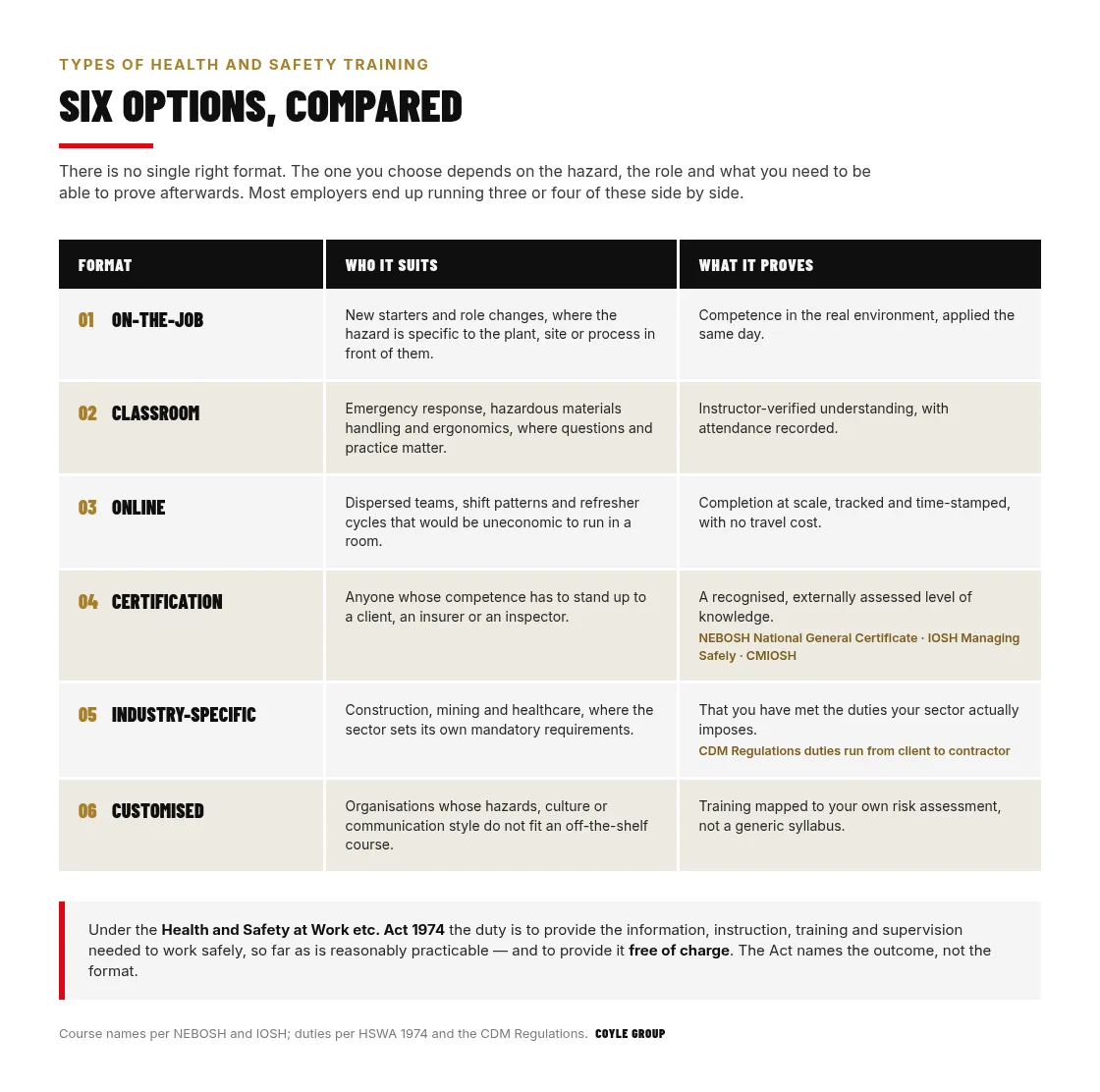
There are six options available for safety training, and most employers end up running three or four of them side by side.
On-the-job Training
This type of training is provided by an employer and typically takes place on the job site. It allows employees to learn in a real-world environment and apply the knowledge and skills they gain immediately on the job.
Classroom Training
This type of training typically takes place in a classroom setting and is led by a trained instructor. It can include training on emergency response, hazardous materials handling, and ergonomics.
Online Training
This type of training can be completed through an online course or e-learning platform. It can be a flexible and convenient option and can be accessed on demand at a self-paced schedule.
Safety Certifications
Many professional safety bodies offer qualifications that demonstrate a level of knowledge and skills in specific areas of safety. In the UK, examples include the NEBOSH National General Certificate, IOSH Managing Safely, and professional membership of IOSH (such as CMIOSH status). The HSE also runs its own training courses on subjects from asbestos and PAT testing through to stress and mental health, which is a useful benchmark for what a credible syllabus covers.
Industry-specific Training
Some industries have specific safety training requirements, such as construction safety training, mining safety training, and healthcare safety training. On UK construction projects, the CDM Regulations place duties on everyone involved, from clients to contractors.
Customised Training
Some organisations offer customised training programmes that are tailored to the specific needs of the organisation, built from their own risk assessment rather than a generic syllabus.
Most employers end up combining three or four of these six rather than picking one, with certification supplying the evidence and on-the-job training supplying the behaviour. The mix should follow your hazards rather than a provider’s catalogue.
Keep Your Workplaces Safe and Legally Compliant
The questions below are the ones employers ask us most often once the format decision is made. They cover what the law expects, which courses are common in the UK, and how to tell whether the training actually worked.
What is safety training and what are the benefits for employees and employers alike?
Safety training refers to the process of educating employees about potential hazards and safe practices in the workplace.
Benefits for employees: increased awareness of potential hazards, improved safety skills, reduced risk of injury, and increased productivity.
Benefits for employers: compliance with legal and regulatory requirements, reduced liability, increased employee morale and retention, and improved company reputation.
What types of safety training are available in the UK?
Common courses include manual handling, working at height, fire safety, first aid at work, COSHH, asbestos awareness, and DSE (display screen equipment) assessment. Alongside these sit recognised qualifications such as the NEBOSH National General Certificate and IOSH Managing Safely.
How can you be sure that the safety training you choose is right for your company’s needs?
Assess your current safety culture, identify specific training needs, evaluate the training provider, tailor training to the company’s culture, include hands-on training, measure effectiveness, and continuously update the training. NHS Scotland’s Healthy Working Lives service publishes a plain summary of the training types an employer is expected to provide, which is a sensible cross-check against any provider’s proposal.
How can on-site safety training be customised?
By conducting a thorough assessment of the company’s current safety practices and tailoring content, format, and delivery to the unique hazards, culture, and communication style of the company.
What are the benefits of online safety training courses?
Employees can complete training at their own pace, access it remotely, and work to flexible schedules. Employers benefit from cost-effectiveness (no travel or accommodation), easy tracking, frequent updates, and scalability.
How much should you budget for safety training?
Treat training as a recurring line in the budget rather than a one-off cost, and set aside a realistic share of payroll based on your sector, workforce size, and risk profile. Plan for at least annual refresher sessions.
How can employers ensure that their workers receive proper safety training?
Conduct a thorough assessment, research and evaluate training providers, tailor to company culture, include hands-on training, measure effectiveness, and continuously update.
How can on-the-job injuries be prevented with safety training?
By educating employees about hazards, the proper use of equipment and PPE, providing hands-on training, and running regular refresher training.
How can employers ensure workers are following safety protocols on the job site?
Implement a documented safety management programme with regular inspections, audits, and safety meetings. Establish a system for reporting safety incidents and near-misses. Conduct regular training sessions and drills.
What are best practices for implementing a successful safety training programme?
Conduct a thorough assessment of current safety culture, identify specific training needs, evaluate training providers, tailor to company culture, include hands-on training, continuously update, and measure effectiveness.
The thread running through all of those answers is evidence. Training you cannot demonstrate, either through records or through changed behaviour on site, will not help you when an inspector or an insurer asks.
Choosing the Right Training for Your Team
There are several options available for safety training that can help organisations ensure the safety of their employees and customers, and meet industry regulations. By providing safety training, employers can increase their employees’ knowledge and skills, which in turn can lead to a reduction in accidents and injuries in the workplace. Getting it right is also one of the compliance challenges many employers grapple with as they grow.
Under HSWA 1974 the duty is to provide the information, instruction, training and supervision people need to work safely, and to provide it free of charge. The Act names the outcome, not the format, which leaves the choice with you. Book a compliance consultation and we will map the training plan against your actual risk assessment instead of a provider’s catalogue.
Frequently Asked Questions
What is safety training and what are the benefits for employees and employers?
Safety training educates employees about potential hazards and safe practices. Benefits for employees include increased hazard awareness, improved safety skills, reduced injury risk, and increased productivity. Benefits for employers include regulatory compliance, reduced liability, improved morale and retention, and better company reputation.
What types of safety training are available in the UK?
Common UK courses include manual handling, working at height, fire safety, first aid at work, COSHH, asbestos awareness, and DSE assessment, plus recognised qualifications such as the NEBOSH National General Certificate and IOSH Managing Safely.
How much should you budget for safety training?
Set aside a realistic, recurring share of payroll rather than treating training as a one-off cost, and plan for at least annual refresher sessions. The right figure depends on your sector, workforce size, and risk profile.
What are the best practices for implementing a successful safety training programme?
Conduct a thorough assessment of current safety culture, identify specific training needs, evaluate training providers, tailor training to company culture, include hands-on training, continuously update, and measure effectiveness by conducting follow-up assessments.
Is health and safety training a legal requirement in the UK?
Yes. Under the Health and Safety at Work etc. Act 1974 employers must provide the information, instruction, training and supervision people need to work safely, and must provide it free of charge. The Act names the outcome rather than the format, so the choice of classroom, online or on-the-job delivery is yours to justify against your risk assessment.
What is the difference between NEBOSH and IOSH?
IOSH is the professional membership body, and its courses such as IOSH Managing Safely are shorter awareness-level programmes aimed at managers and supervisors. NEBOSH is an examination board, and its qualifications such as the National General Certificate and the Diploma are longer, assessed and used as the baseline for safety roles. A rough rule: IOSH for managers who need to understand safety, NEBOSH for people whose job is safety.
How often should health and safety training be refreshed?
There is no single statutory interval, so the trigger is change rather than the calendar: new equipment, new processes, a role change, an incident, or evidence that people are not following the controls. That said, plan for at least annual refreshers on the high-risk topics, and treat training as a recurring budget line rather than a one-off project cost.